Close
My Military
OneSource App

Millennium Cohort Program

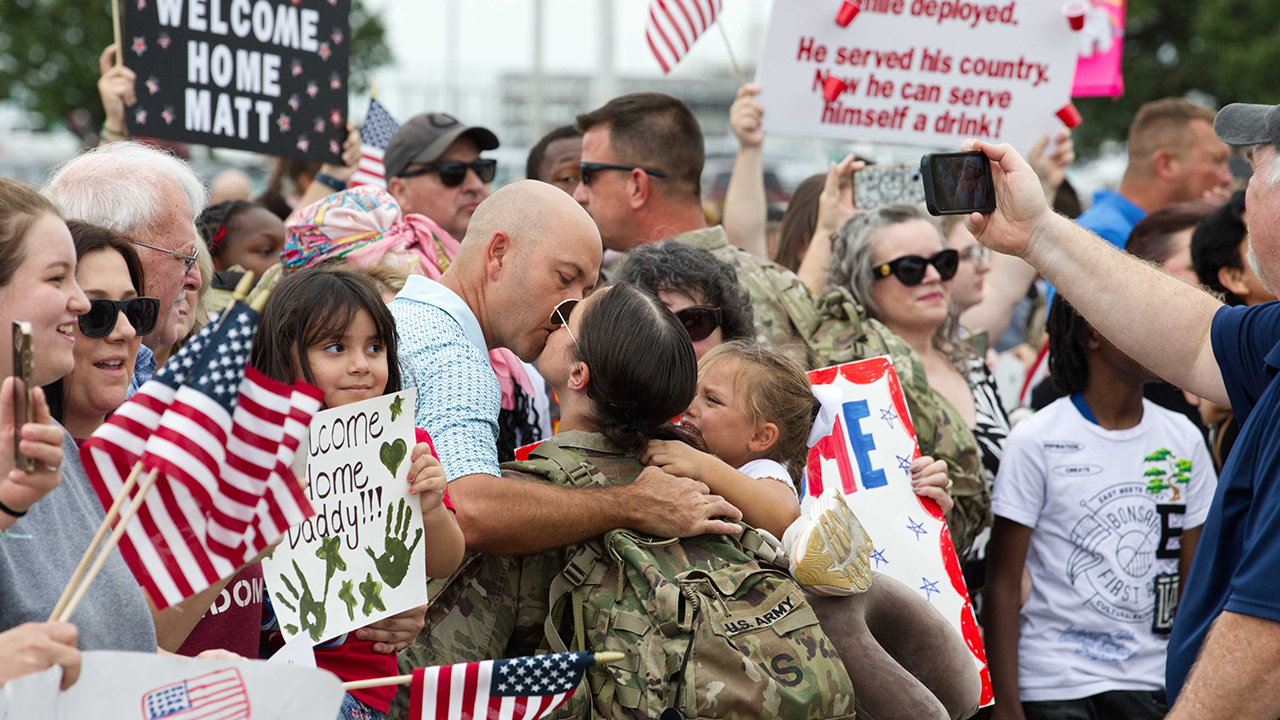
Service member holding two kids

Overview

The Millennium Cohort Program is a long-term research program supported by the Defense Health Agency, Department of Veterans Affairs and Military Community and Family Policy, including three major research efforts: The Millennium Cohort Study, Millennium Cohort Family Study and Millennium Cohort Study of Adolescent Resilience. The longitudinal study is designed to understand how military life affects military-connected youth’s psychological and physical health, academic achievement and educational/career aspirations.  Its findings will help the Defense Department gain invaluable insights, shape effective interventions and develop or enhance policies to support their well-being.

View the results of the 2022 Millennium Cohort Study of Adolescent Resilience.


Millennium Cohort Family Study Infographics

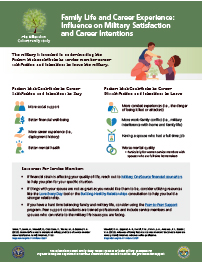
Understanding factors that contribute to retention is critical for the military. This research identified factors that contribute to service members’ career satisfaction/dissatisfaction and their intentions to stay or separate from the military.

Separating from the military can affect the service member’s spouse in both positive and negative ways. Spouses whose families transitioned from active-duty service experienced increased post-traumatic stress symptoms and a decline in the quality of their marital relationships. However, they also experienced less work-family conflict.

Most spouses in this study had healthy drinking habits. Factors associated with risky drinking included being younger, male, prior alcohol use, cigarette use, having a partner exposed to combat while deployed and symptoms of post-traumatic stress, particularly combined with depression.

Nearly 5% of military spouses in this study were found to have a probable diagnosis of major depressive disorder. Factors increasing the likelihood of depression include less educational attainment, large family size, unemployment, prior military service and having a spouse with PTSD.

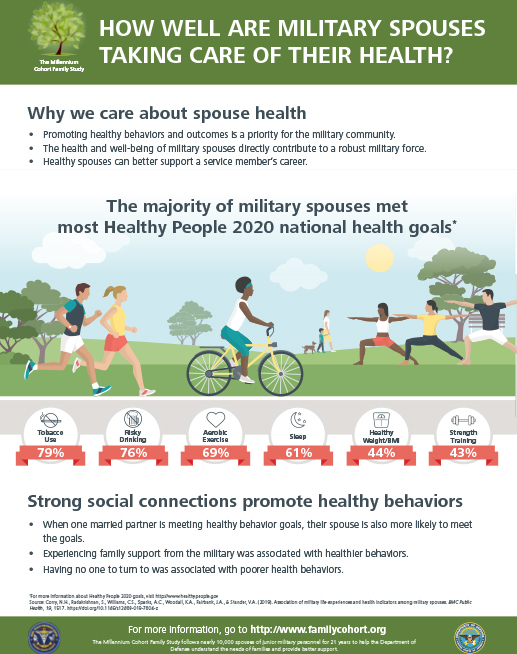
The majority of military spouses in this study met Healthy People 2020 national health goals with the exception of strength training and maintaining a healthy weight. The study found that family support from the military was associated with healthier behaviors while having no one to turn to for support was associated with poorer behaviors.

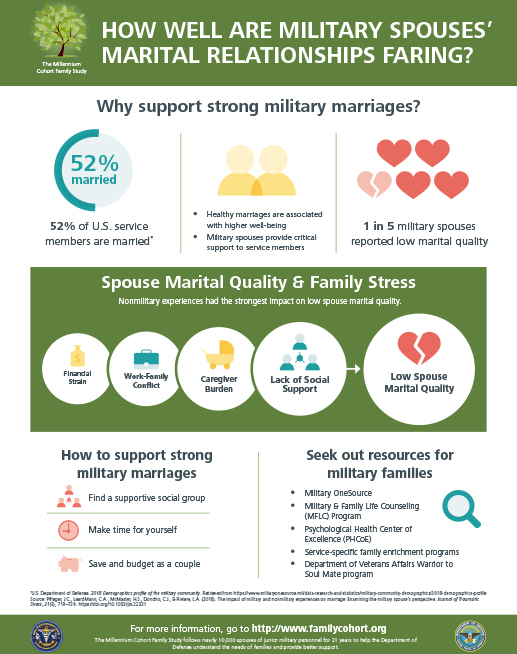
Results of a study on military life and the well-being of military marriages indicated that most couples in the military community do not experience negative consequences from military life. However, there may be impacts for couples who experience significant work-family conflict, and in cases where a service member experiences post-traumatic stress. Also couples without good family or friendship networks and significant financial strain also experience more difficulty.

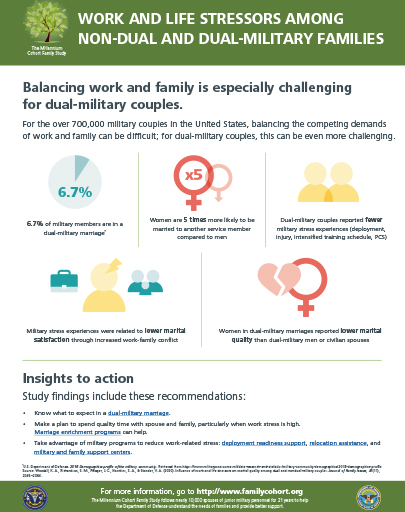
Stressful military events negatively affect marriage quality, with women in dual-military marriages reporting lower marital quality due to military stress, according to this study. The findings highlight the importance of supporting military spouses through stressful events and potentially tailoring support for female dual spouses.

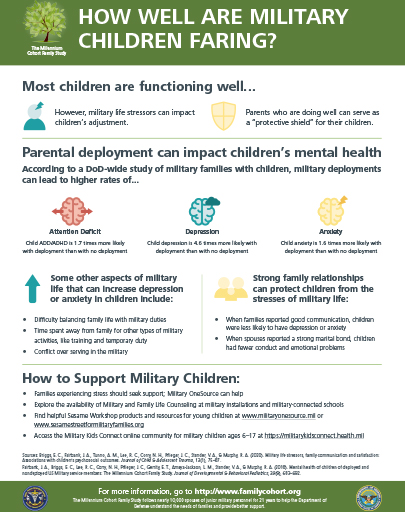
Most military children are functioning well. However, in a minority of children, a parent’s deployment has been linked to attention deficit disorder, attention deficit hyperactivity disorder, depression and anxiety. The study found that strong family relationships can protect children from the stresses of military life.

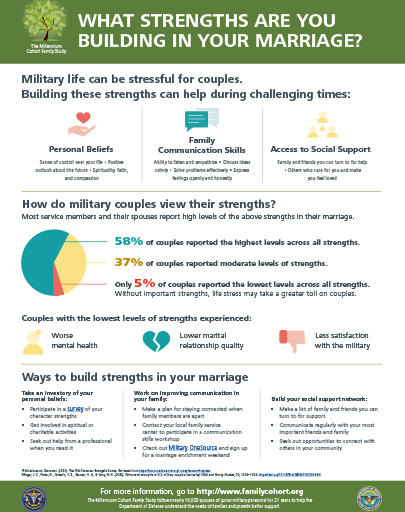
The majority of military couples have a strong belief system, social support and good family communication. The study found that lower strengths in these areas were linked to lower mental health, marital quality and military satisfaction. These findings highlight the need to adopt a family-centered perspective in military resilience programs and policies.

The study examined military life stress and perceived support among different groups of spouses. Results indicated that spouses over age 35 with a high school diploma or less and two or more children, among other factors, were more likely to report military life stress and less perceived support. Spouses who were part of a dual military couple reported less military life stress and higher perceived support than spouses who had not served.

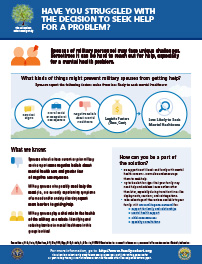
Military spouses face unique stressors but may be reluctant to seek mental health care. The study found that the most frequent barrier to care is logistical, followed by negative attitudes towards mental health care. Spouses with prior or current military service report more negative beliefs about mental health care and greater fear of negative consequences.

Still Need Help? Connect with an expert 24/7/365.

We get military life, and we’re here to connect you to the right kind of guidance — from quick answers to support for challenges.

If you are in immediate danger, call military law enforcement or dial 911.

Call to talk with us.

Get personalized support over the phone, anytime.

800-342-9647

Start a secure chat.

Log in to get started — no forms required.

Chat Now

Learn about military bases worldwide. Get installation overviews, check-in procedures, housing, contacts for programs and services, photos and more.

Find an Installation