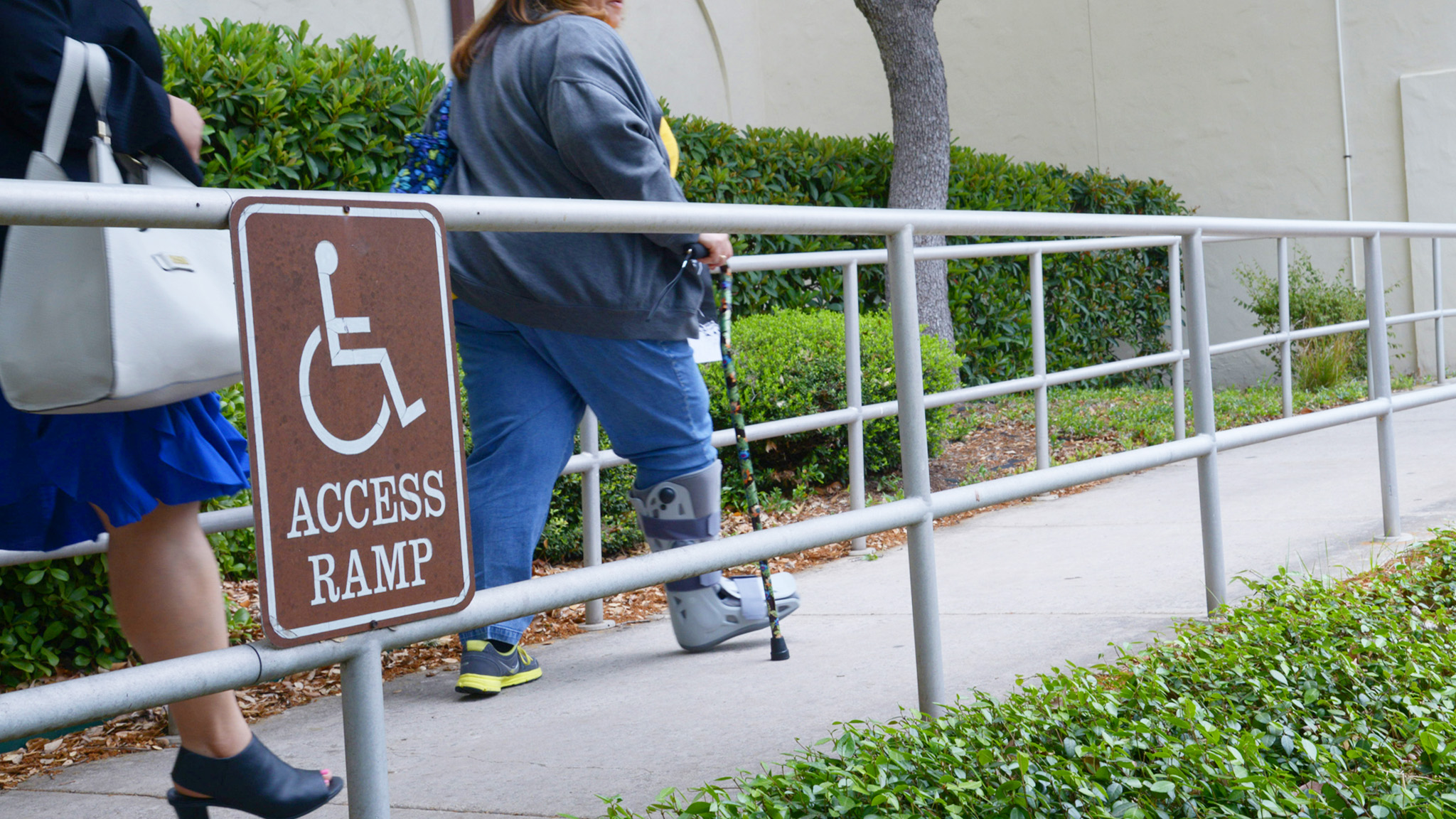
The Americans with Disabilities Act protects the civil rights of people with disabilities, ensuring they have equal access to job opportunities, buying goods and services, and taking part in state and local government programs and services.
ADA safeguards those with physical or mental impairments that significantly restrict major life activities like walking, speaking, hearing and working. It also extends to injured service members with a military disability, such as traumatic brain injury, spinal injury, loss of a limb, vision or hearing loss and post-traumatic stress disorder.
Employment
The ADA makes it illegal to refuse to hire qualified people based on disability. Employers are also required to make reasonable adjustments for employees with disabilities, such as:
- Flexible scheduling
- A parking space close to an entrance
- Allowing service animals in the workplace
- Providing special equipment
Computer/Electronic Accommodations Program
The Computer/Electronic Accommodations Program provides assistive technology and reasonable accommodations to Defense Department employees with disabilities and wounded service members. CAP’s mission is to ensure that DOW employees with disabilities and wounded service members throughout the DOW have equal access to information and communications technology. Assistive technology can help people who have difficulty speaking, typing, writing, remembering, pointing, seeing, hearing, learning, walking and many other challenges. This technology increases independence, self-esteem, well-being and mission readiness.
Access to goods and services
Per the ADA, businesses that offer goods and services to the public must make adjustments to how they do business so that people with disabilities can be their customers. Businesses covered by the ADA include:
- Grocery stores
- Bars and restaurants
- Medical offices
- Gyms
- Sports arenas and concert halls
All buildings built since the ADA went into effect must provide easy-to-use access to people who have movement or sensory disabilities. Changes businesses might make include:
- Reading a menu to someone with impaired vision
- Providing a large-print copy of a rental contract
- Installing a ramp
- Providing accessible parking spaces
- Lowering a paper towel dispenser
Access to public services
State and local governments must also follow ADA rules and make changes to activities and services. Public services include:
- Public trade schools
- Community colleges
- Libraries
- Public hospitals
- Parks
- Public transportation
All programs must be available to people with disabilities, but not all buildings have to be accessible. Governments can choose whether to:
- Correct access problems at an inaccessible building
- Move a program to an accessible building
- Find another way to allow disabled persons to participate
Some resources for service members with disabilities include:
Learn more by reading the booklet The ADA: Know Your Rights — Returning Service Members with Disabilities. This booklet provides information about employment accommodations, business access modifications, civic life and more. It also includes links to other helpful publications and agencies.
Still have questions? Military OneSource provides wounded warrior specialty consultation services and can help with ADA questions and more. Consultants collaborate with the services’ wounded warrior programs and the VA to swiftly connect callers to resources that meet their needs. To speak with a consultant, call 800-342-9647, log in to start a secure live chat or view overseas calling options.


 Support for Military