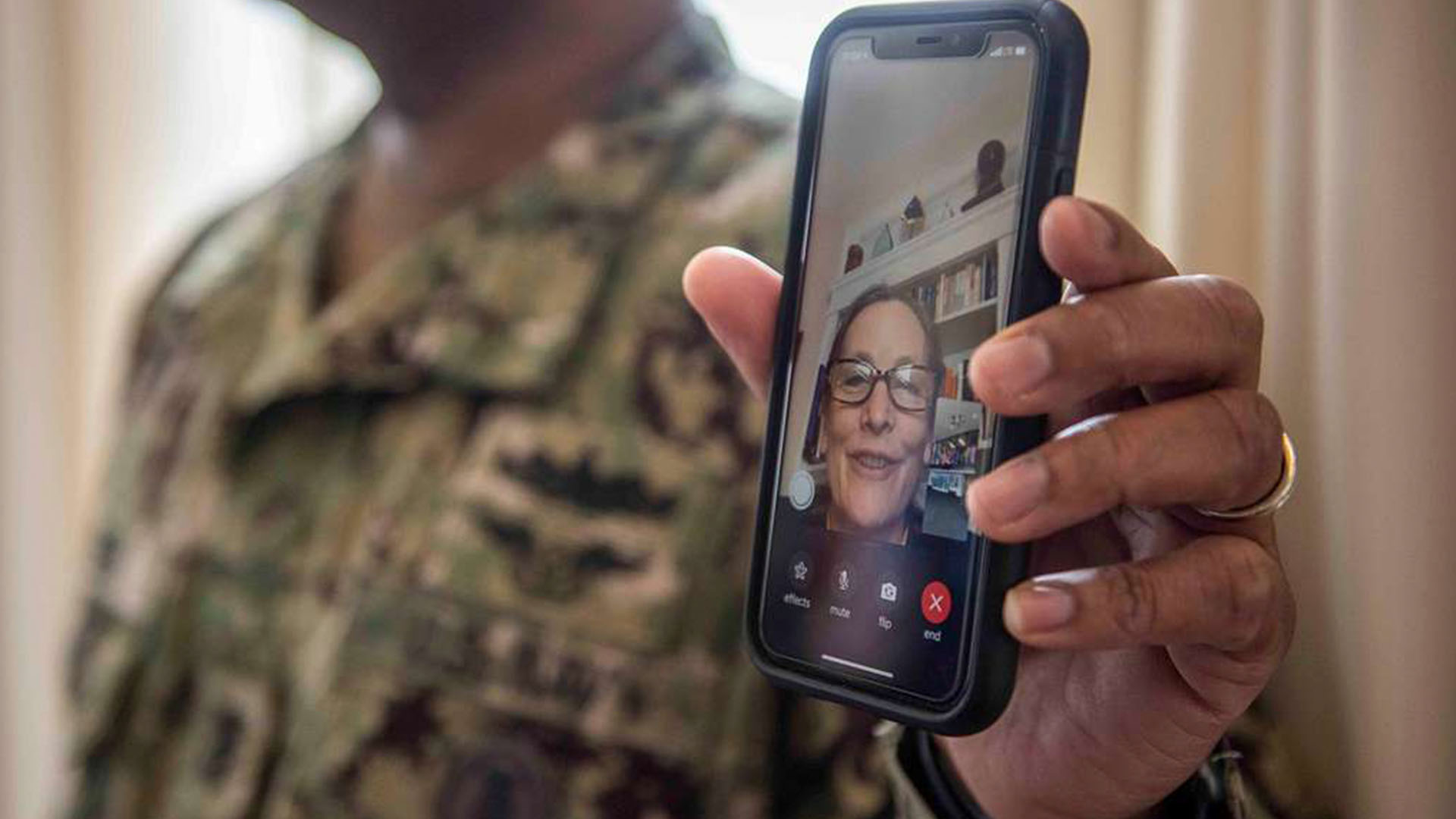
Communication with family is a lifeline for service members and military families during deployment. Keeping in touch with a deployed member can help reduce stress for both the member and the family, contributing directly to both readiness and retention.
Morale, Welfare, and Recreation Internet Connect Platform (MWR ICP)
Communication is getting a digital upgrade as the War Department implements a global network designed to keep deployed service members connected to home.
Recognizing that connectivity directly drives family stability, department officials have aggressively expanded the Morale, Welfare and Recreation Internet Connect Platform (MWR ICP). Overseen by the Office of the Deputy Assistant Secretary of War for Military Community and Family Policy, the initiative aims to bridge the digital divide between the home front and the front lines.
“Military Community and Family Policy directly supports warfighter readiness by reducing stress, building resilience and strengthening connections across the force,” said Glenn Garrison, director of Morale, Welfare and Recreation and Resale Policy within MC&FP. “By improving quality of life and supporting strong families and communities, we play a key role in retention and overall force readiness.”
The MWR ICP service targets a historically persistent challenge of military life: reliable communication in remote or austere environments. The platform ensures deployed warfighters have high-speed, stable internet connectivity, enabling them to reach out to family and friends via social networks, long-distance calls, video chats, email and web browsing.
ICP locations include tactical environments such as deployed tents, forward operating bases and temporary internet cafes; field command locations including temporary installations and staging areas throughout Germany, Turkey, Italy, the Middle East, Southwest Asia and broader European/African sectors; and the Pacific area, which includes remote outposts in Hawaii, Okinawa, Japan and Guam.
Military officials prioritize operational security and tactical bandwidth allocation over leisure connectivity, and ensure these services are available and accessible only when they do not compromise the primary military mission.
Department officials confirmed that 100% of allocated sites are deployed and operational, with ongoing technical upgrades to enhance communication quality, security and reliability. As an added benefit to the warfighter, the ICP service is also continuing to expand the availability of AFN Now, the Department’s free overseas video streaming app that delivers top-rated U.S. television shows, movies, daily news and American sports, e.g., NFL, NBA, NHL and MLB.
Officials said the online streaming content keeps service members informed, entertained, educated and connected with their families and colleges/universities.
Reserve Component Spouse Survey Collects Input on Communications, Other Top Issues
To ensure future support programs like the MWR ICP expansion meet the evolving needs of military families, MC&FP is urging reserve component spouses who received an invitation to participate in the 2026 Survey of Reserve Component Spouses to share their experiences before feedback closes Aug 20. Questions will reflect each respondent’s family situation.
Recent survey findings showed that communicating with their spouses was critical to helping them reduce stress associated with their service members’ deployment.
According to data from the 2023 Survey of Reserve Component Spouses, an overwhelming 95% of spouses surveyed reported that the ability to communicate with their deployed husband or wife was one of the most important factors helping them cope with deployment.
“This survey gives reserve component spouses a seat at the table when it comes to influencing policies that impact their families,” Dorvil said.
“For families at home, that baseline infrastructure is critical,” said Malikah Dorvil, research program analyst for the Office of Military Community and Family Policy.
The 2023 survey highlighted that communication was a top factor in coping with deployments, followed by knowing the exact length of a deployment (93%) and deployment pay (86%). Department officials note that it directly strengthens the morale, well-being and operational readiness of service members by mitigating the isolation of long-distance assignments, regardless of their deployment location.
“The Survey of Reserve Component Spouses is the definitive survey on National Guard and reserve spouses and provides a representative cross-section of spouses’ military life experiences,” Dorvil said. “It helps track trends over time and supports priority-setting and decision-making by department leadership. Its findings help improve programs, policies and resources that support reserve component family readiness.”
Reserve and Guard spouses were randomly selected for the survey and contacted via email or postcard. Those who received an invitation are strongly encouraged to complete the survey online or via the mail-in option before the Aug. 20 deadline.
Spouses can check their eligibility for the survey at https://dodsurveys.mil
About Military Community and Family Policy
Military Community and Family Policy is responsible for establishing and overseeing quality of life policies and programs that help our service members, their families and survivors be well and mission ready. Military OneSource is the gateway to programs and services that support the everyday needs of the over 4.3 million service members and immediate family members of the military community. Access these DOW services 24/7/365 around the world.


 Support for Military