Close
My Military
OneSource App
ARTICLE

Becoming an Officer in the Military After College

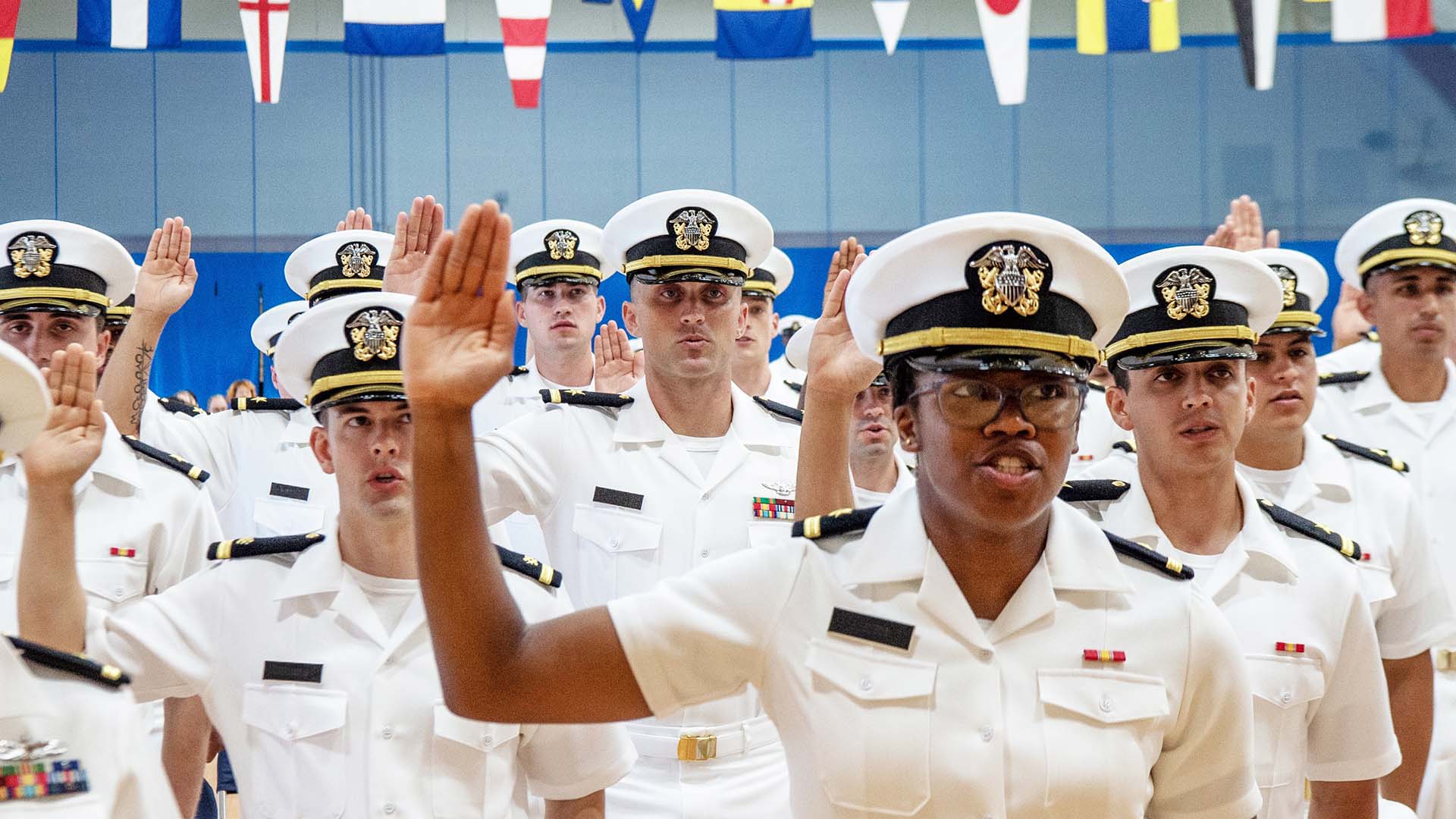
Officer training school graduation

While it’s common knowledge that basic training sets recruits on the pathway toward becoming an enlisted service member, those with a desire for leadership opportunities and a bachelor’s degree can take another route into a military career — as a commissioned officer.

The Reserve Officers’ Training Corps program for college students and Officer Candidate School or Officer Training School for graduates are common routes into officer service. The Coast Guard offers parallel commissioning options, even though it does not have a traditional ROTC program like the Army, Navy or Air Force.

The benefits of joining the military after college

Joining the military as a commissioned officer can offer the best of both worlds for those who want the college experience but also want to serve their country. The benefits include:

  • A guaranteed job after college
  • A leadership role at a young age
  • Higher pay than joining as an enlisted military member
  • Greater opportunities for promotion and training

Rising through ROTC

The ROTC program prepares students to become military officers while they pursue a four-year degree at an accredited college. ROTC is offered at more than 1,700 colleges and universities nationwide.

The Army, Navy and Air Force each offer four-year ROTC scholarships to college-bound high school students, and two- and three-year scholarships for students already in college. Navy ROTC students have the option of joining the Marine Corps after graduation.

The scholarships help pay for tuition and books and include a monthly stipend for living expenses. ROTC students who accept scholarships commit to service as officers after graduation. The military service obligation varies according to branch but ranges from three to eight years.

Enrolling in ROTC

Enrollment requirements differ among service branches, but in general, ROTC candidates are required to:

  • Be a United States citizen
  • Be at least 17 years old and on schedule to receive their college degree before age 27
  • Score above a certain minimum on the SAT or ACT standardized tests
  • Meet physical fitness requirements for their branch of service
  • Receive medical clearance

How ROTC works

While there are differences among each service branch, as an ROTC cadet, you can expect to:

  • Take courses in military science, leadership and related topics alongside your regular college curriculum
  • Participate in regular drills and summer training activities
  • Maintain a minimum grade point average during college

Army ROTC graduates earn a commission as a second lieutenant and continue their training in their specific branch at the Basic Officer Leaders’ Course. Navy and Air Force ROTC graduates continue their training at Officer Candidate or Training School before receiving their commission as a second lieutenant.

Learn more about the ROTC program at each service branch:

What about the Coast Guard?

The Coast Guard does not offer a traditional ROTC program, but it provides highly competitive alternatives: the College Student Pre-Commissioning Initiative and U.S. Coast Guard Auxiliary University Programs.

Description:

  • The closest equivalent to ROTC.
  • You enlist in the Coast Guard as active duty while in college
  • Transition to Officer Candidate School upon graduation

Key Benefits:

  • Full tuition, fees and books are covered
  • Full active-duty salary as an E-3
  • Housing allowance while attending school

Who is Eligible:

  • Sophomores or juniors enrolled at a federally designated Minority Serving Institution
  • U.S. citizens, ages 19-28

Description:

  • A civilian-focused program operated by the U.S. Coast Guard Auxiliary
  • College students are trained in maritime leadership and Coast Guard operations
  • It does not guarantee a military commission

Key Benefits:

  • It provides education, training and hands-on experience in Coast Guard missions
  • A highly prioritized track for gaining an officer commission upon graduation

Who is Eligible:

  • Open to undergraduate and graduate students at participating colleges and universities

Other Coast Guard-aligned educational paths include the Direct Commission Selected School and Maritime Academy Graduate programs. Both offer a fast-track commissioning route, bypassing traditional Academy or OCS paths:

Description:

The DCSS program is for graduates of certain military colleges and senior military academies (e.g., The Citadel, Virginia Military Institute, Norwich University, Texas A&M and others).

Eligibility:

  • U.S. citizen
  • Bachelor’s degree from a qualifying military college or academy
  • Age and other requirements as specified by the Coast Guard

Pathway:

Selected applicants attend a multiweek Direct Commission Officer training course at the Coast Guard Academy in New London, CT, and are commissioned as Ensigns.

Description:

The MARGRAD program is for graduates of state or federal maritime academies (e.g., Maine Maritime Academy, Massachusetts Maritime Academy, U.S. Merchant Marine Academy, etc.).

Eligibility:

  • U.S. citizen
  • Bachelor’s degree from a recognized maritime academy
  • Merchant Mariner Credential with officer endorsement
  • Age and other requirements as specified by the Coast Guard

Pathway: Selected applicants attend a multiweek DCO training course at the Coast Guard Academy and are commissioned as Ensigns.

From officer school to officer

The Army, Marine Corps and Coast Guard call it Officer Candidate School. In the Navy and Air Force, it’s Officer Training School. No matter its name, this intensive training program will prepare you mentally and physically for the demands of being a commissioned military officer.

Requirements for officer school

Being a U.S. citizen and having a four-year college degree or higher are the bare minimum requirements for officer school. Beyond that, the selection process is highly competitive across service branches. Candidates must meet physical standards, may have to pass a qualifying test and demonstrate that they have leadership ability, integrity, dependability, academic discipline and adaptability.

About Officer School

Officer school spans nine and a half to 12 weeks, depending on your branch of service. During that time, you will begin to develop the qualities of an officer, including military bearing, teamwork and the ability to perform under pressure and adverse conditions.

Curriculum varies according to service, but in general, training school includes:

  • Regular physical conditioning and physical fitness tests
  • Academic classes in military subjects, leadership and ethics, and other subjects
  • Military training, including inspections and drills

Learn more about Officer Training School and Officer Candidate School by service branch.

Other paths to becoming a military officer

Attending officer school after college is just one way to earn a commission in the military. There are other paths as well:

  • Attend a military service academy. Each branch of the military has a four-year university that offers full scholarships to its students. Graduates serve as commissioned officers in the military. Acceptance into these academies is highly competitive.
  • Advance through the enlisted ranks. Enlistees may use their military education benefits to earn a four-year degree, and then apply to officer school.
  • Receive a direct commission after earning a professional degree, such as a medical, law or religious studies degree. Direct commission officers are required to attend officer training. This is a good option for civilians who want to serve their country and who have special skills to offer.

You can learn more about joining the military as a commissioned officer by contacting a recruiter from your service branch or calling Military OneSource at 800-342-9647.

We are sorry you didn't find this article helpful. Please provide a little more information to help us improve.

Learn about military bases worldwide. Get installation overviews, check-in procedures, housing, contacts for programs and services, photos and more.

Find an Installation