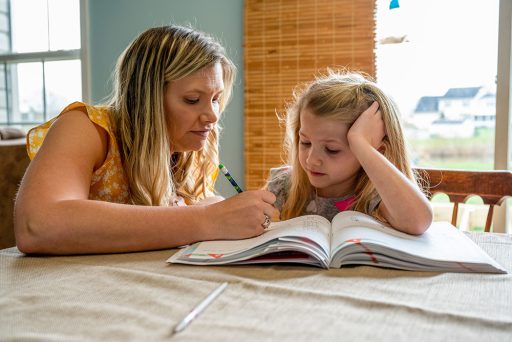
Parenting can feel nonstop, especially for military families balancing long workdays, training schedules, deployments and frequent moves. Even small, intentional moments of connection with your children can make a big difference. Being fully present helps children feel safe. It supports healthy emotional development and can make everyday challenges easier to handle.
Below are simple, effective ways to help parents engage, respond calmly and better understand what their children need at different ages.
Making connection part of the day
Being fully present with your child — even in short bursts — can improve your relationship and help them feel secure and supported.
…when we slow down, even just for a few moments, to have calm and positive engagement with our children, it will multiply tenfold in terms of their emotional regulation, ability to stay calm, less frustrated, which in turn helps us as well.
– Shannon M. Best, a licensed marriage and family therapist
Making time for connection is easier when you plan for it. Try scheduling five or 10 minutes after a meal to read together, or for a short check-in when you or the kids get home and before moving on to other activities. Without distractions, such as a phone or television, and with your full attention, small routines such as these can add up and strengthen parent-child relationships.
Children of all ages benefit from face-to-face time with parents. Here are more ways that you can engage with your child.
Understanding why your phone habits matter
Phones and other screens are part of modern life, but how you use them around your children matters. Research shows that screen use around babies and toddlers can interfere with bonding. When you are distracted by screens, you can miss chances to connect with your child.
Attachment and connection are built through attention and interaction, even before a child can talk. When you are focused on your phone instead of your child, it can become harder to build that connection. Being mindful of screen use during caregiving, play and shared time helps protect those important connections.
You can model healthy tech habits by putting phones away during meals, playtime and conversations. Being present helps kids feel safe. When you’re paying attention, you’re more likely to notice signs of frustration, risk-taking or distress early and step in before things escalate. Unplugged time shows your child they matter.
Staying calm during tantrums and challenging moments
It can be challenging when children throw tantrums or teens act out, but how you respond can either calm the situation or escalate it. Children and teens often match a parent’s emotional energy. When you respond with anger, kids often escalate further. When you stay calm, it can help de-escalate the situation.
Staying calm is one of the best ways to help your child calm down. Taking deep breaths, slowing down or pausing briefly — as long as your child is safe — can prevent yelling or power struggles.
If you lose your cool, a simple acknowledgment and apology can go a long way: “I’m sorry I yelled. I didn’t handle that the way I wanted to. I’m here with you now.” Rebuilding connection after tough moments teaches accountability and models healthy relationships.
Understanding what’s developmentally normal
Many frustrating behaviors might be developmentally normal for a child’s age. Toddlers saying “no” or needing to complete a task independently can look like defiance, but these behaviors are often signs of healthy development. School-age children might ask endless “why” questions as they figure out how the world works. Preteens push for independence as they build their own identity, and teenagers may test limits, seek more independence and negotiate rules.
When you know what behaviors are developmentally appropriate, you can respond with more patience. Setting boundaries and expectations are still important. Children learn best when your expectations account for their developmental stage. When you adjust your expectations, you’re better prepared to guide behavior in positive ways and focus on teaching skills instead of reacting to frustrations.
Using discipline as a teaching tool
Positive discipline is about teaching and structure. Positive discipline techniques focus on predictable routines and age-appropriate expectations that adjust as children age.
These approaches help children learn from mistakes and from what happens next. Natural consequences can be powerful learning tools. Talking through what happened and what can be done differently next time helps young children and teenagers turn mistakes into life lessons. Punishment is often not needed when children can see the result of their actions and are supported to do better next time.
Setting boundaries with consistency and flexibility
Clear boundaries help children feel safe, but extremes can backfire. Boundaries that are too harsh or too permissive can create confusion.
Parents can balance structure with flexibility in terms of discipline and boundaries by thinking of it as a rubber band, where it’s a clear line, but there is some give either way, as opposed to being a marshmallow where there’s no boundary or a brick wall where it’s too strict, but a rubber band is flexible.
– Shannon M. Best, a licensed marriage and family therapist
Consistency matters. When expectations change frequently, children may push back or feel unsure of what is expected. Staying realistic, relevant and consistent helps avoid power struggles and supports trust.
Finding support when needed
Parenting in the military community can bring unique challenges, and you do not have to handle them alone. If you have questions or need extra support, you can reach out to your installation’s Family Advocacy Program or New Parent Support Program. These resources can help you navigate stress, child development concerns and everyday parenting challenges.
Confidential counseling is also available for families navigating teen concerns, such as school transitions, peer challenges, safety issues or stress during periods of separation.
Engaged parenting is not about doing everything perfectly. It’s about showing up, staying connected and being willing to repair the relationship and try again. Those everyday moments of attention and care help build strong relationships that support your child at every age and stage.


 Support for Military