The stripes and bars on your military uniform signify rank. Whether you’re new to service or advancing your career, understanding rank matters and shapes your responsibilities, pay and how others address you.
While it can take time to learn what every insignia means, having a working knowledge helps you navigate daily interactions, promotions and leadership expectations with confidence.
A quick vocabulary lesson
Here are some key terms you’ll hear throughout your military career:
Rank: Think of rank as the military’s organizational structure.
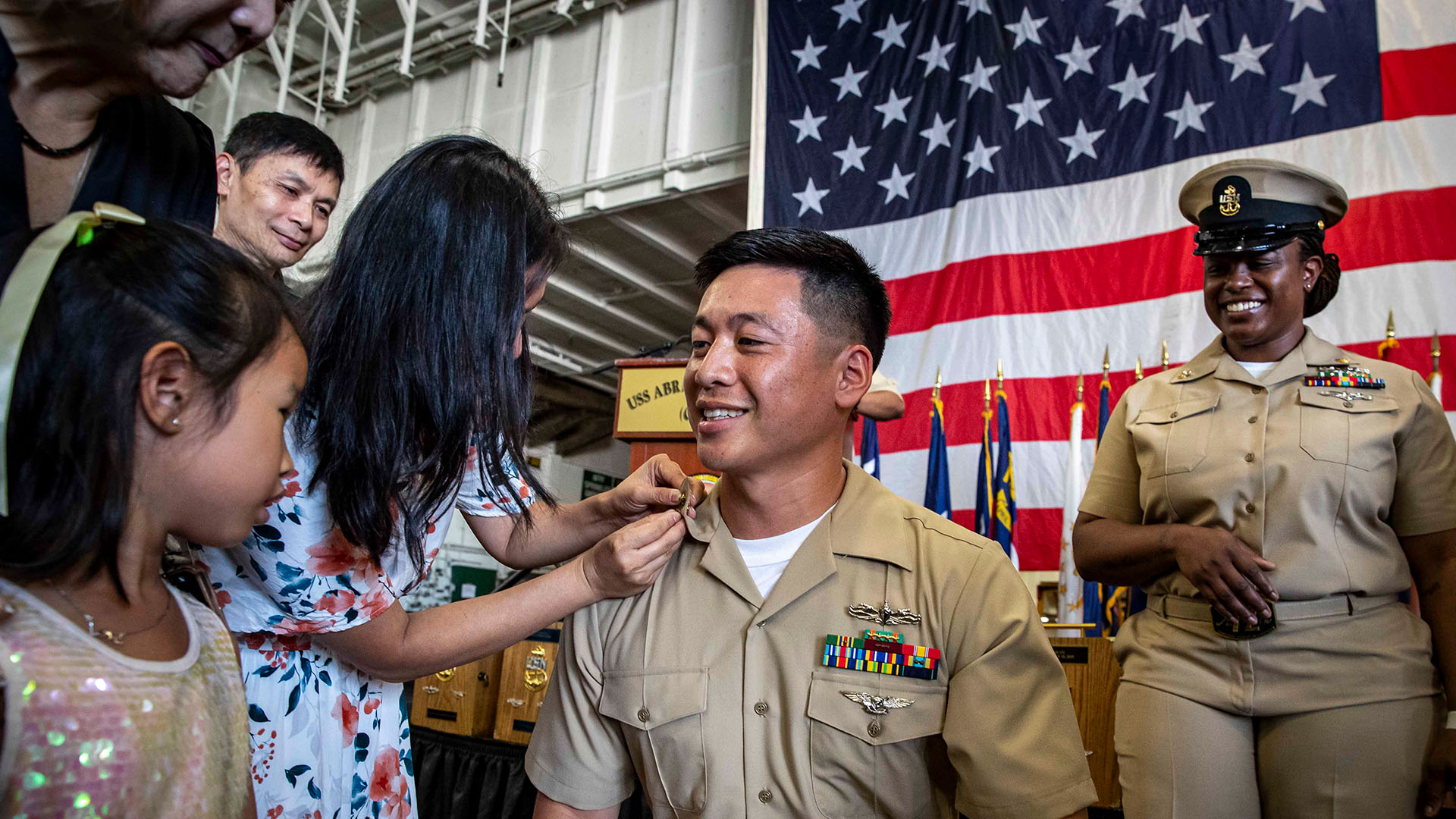
Insignia: Insignia on service members’ uniforms can represent rank, rate or designator. These symbols may include chevrons, bars, oak leaves or stars. Insignia typically appear on the shoulder or collar, while stripes on a uniform sleeve often represent years of service.
Pay grade: Service members of the same pay grade earn the same base pay across branches. Pay grades combine a letter and a number, such as O-1 for an entry-level officer or E-4 for an enlisted service member, though responsibilities vary by role and branch.
Who wears what and why
Here’s a breakdown of the common insignia you’ll see across the military:
- Chevrons: Most enlisted personnel in every military service branch wear chevrons, or V-shaped stripes. (In addition to chevrons, enlisted Coast Guard members also wear specialty markings.)
- Bars: Officers in the lower pay grades wear bars. Officers at the O-1 pay grade wear one gold bar, O-2 wear one silver bar, O-3 wear two silver bars and warrant officers wear striped bars.
- Oak leaves: Officers at the O-4 pay grade wear a gold oak leaf, and officers at the O-5 pay grade wear a silver oak leaf.
- Eagles: Officers at the O-6 pay grade wear a silver eagle.
- Stars: Officers at the O-7 through O-10 pay grades wear one, two, three or four stars, respectively.
- Anchors: Coast Guard chiefs E-7 through E-9 wear anchors on their caps and sleeves.
To see how insignia differ by rank and service branch, visit the War Department’s display of officer and enlisted insignia.
Rank categories
Military ranks fall into four main categories:
- Junior enlisted personnel: These are service members at the entry pay grades. Titles vary by branch; for example, an E-1 in the Army and Marine Corps is a private, in the Air Force, an airman basic, and in the Navy and Coast Guard, an E-1 is a seaman recruit. As you gain experience, your rank may stay the same while your responsibilities grow. For example, in the Army, both corporals and specialists are E-4s, but corporals hold leadership authority.
- Non-commissioned officers: NCOs serve in enlisted leadership roles at pay grades E-5 through E-9 and are critical to training, discipline and mission execution.
- Warrant officers: These service members (W-1 through W-5) are technical experts and leaders in specialized fields.
- Commissioned officers: Commissioned officers hold the highest ranks, from O-1 through O-10, and are responsible for leading units and setting mission priorities.
How to greet each rank
Knowing how to properly address fellow service members helps maintain professionalism and respect. Here’s a quick cheat sheet for how to address each rank in person:
- Commissioned officers (Army, Marine Corps and Air Force): Use rank (General, Colonel, Captain, Lieutenant) and last name
- Commissioned officers (Navy and Coast Guard): Use rank (Admiral, Captain, Commander, Lieutenant) and last name
- Warrant officers: Use Warrant Officer and their last name or Mr./Ms. and last name
- Warrant officers Coast Guard: Address as “Chief Warrant Officer [Last name]” or simply “Chief,” depending on local custom.
Addressing enlisted members and NCOs can vary by branch:


 Support for Military