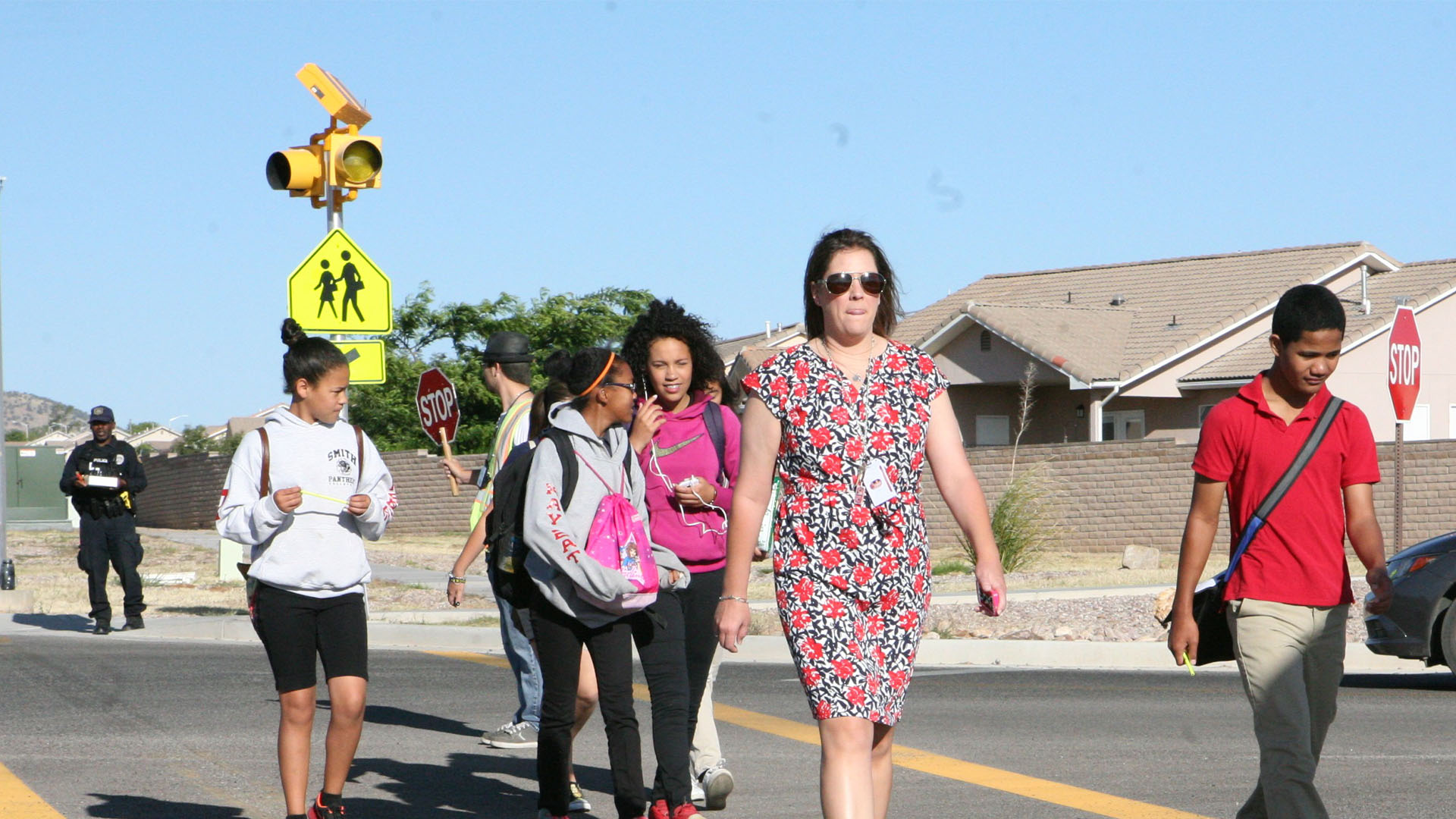
Moving to a new duty station means going to a new state as well as a new school for your military-connected student. The Interstate Compact on Educational Opportunity for Military Children is designed to make those school transitions smooth.
The War Department, in collaboration with the National Center for Interstate Compacts and the Council of State Governments, developed the compact to address the educational transitions for military families. All 50 states and the District of Columbia, along with the Department of War Education Activity, have committed to helping your children enroll in school, register for the classes they need and graduate on time.
Through the compact, states are working together to provide a consistent set of policies that will make getting started in a new school, joining extracurricular activities and meeting graduation requirements as easy as possible for military children.
How the Interstate Compact benefits your family during a military move
The following information highlights how the Interstate Compact can help your family with school transitions during a military move.
Enrollment: The compact makes it easier to get started at a new school.
- School records: You can obtain a copy of your child’s school records from the old school to bring to the new one. Use these until the official records arrive.
- Immunizations: You have 30 days from the time of enrollment to give your child any new required immunizations.
- Kindergarten and first grade: Children can continue in their current class year, even if the new school has a different age requirement.
School liaisons ease school transitions for military-connect students
School liaisons assist with military PCS transitions, including school selection, transfer or credits and youth sponsorship referrals.
Placement: Your child’s progress in the previous school will be recognized.
- Course and program placement: If your child is already in a program, such as advanced placement, the new school must honor that if they have an equivalent.
- Placement flexibility: Prior coursework is taken into account, so your child won’t have to repeat basic classes already taken.
- Attendance: The compact enables a student to miss school for military-related reasons.
- Absence related to deployment: Students may request excused absences before, during and after the related deployment period.
Eligibility for activities: Your child’s eligibility for attending school and extracurricular activities won’t be affected.
- Enrollment: Children can continue to attend their same school if they’re living with a relative, friend or noncustodial parent during the deployment. The guardian will, however, need a power of attorney to enroll or give permission to participate in school activities.
- Extracurricular activities: Even if tryouts or application deadlines have passed, the school will help make it possible for the child to participate.
Graduation: With the compact, graduation for high school students won’t be affected.
- Course waivers: If your child has already completed similar coursework, your child can waive courses required for graduation at a new school.
- Exit exams: The new school district may accept your child’s exit exams and achievement tests required to graduate from the previous school.
- Senior-year transfers: If your student changes school during senior year, the two school districts will work together to get a diploma from the former school to ensure on-time graduation.
The Interstate Compact also covers children with special needs changing schools
In addition to provisions in the Interstate Compact, Military OneSource offers these educational resources for families with special needs:
- The Education Directory for Children With Special Needs: The directory provides the information you need to make informed decisions about education and early intervention services.
- Exceptional Family Member Program: Your local installation EFMP Family Support staff can help you identify and access programs and services related to education, outreach, local school and early intervention services.
- Special Needs Consultants: Special needs consultants can be accessed through Military OneSource. Consultants are available by phone or video to help you navigate the medical and educational needs of your family and connect you with military and community-based support.
How school liaisons can help
School liaisons are located at each installation and are the main contact for military families, local school systems and installation command for school-related matters pre-K through 12. School liaisons are experts in understanding Interstate Compact regulations and how they apply to your child’s specific situation.
School liaisons help with transition support before and after a PCS — by providing information on school districts and boundaries, assisting with transfer of credits and class registration, helping locate after-school and extracurricular programs, and setting up tutoring and youth sponsorship referrals. They can also connect you to the Exceptional Family Member Program and your school’s special education department, as well as help you navigate your new school district’s special education program. Contact your local school liaison for assistance. Watch this video to learn more.
Interstate Compact resources
While the Interstate Compact provides consistent policy for school transfer and enrollment, each state has its own procedures for enforcing the requirements. Find more compact information and resources, including successful transition videos, links to state representatives and more, visit the Military Interstate Children’s Compact Commission, or MIC3, website.
Check out these publications from their “Parents” drop-down menu:
Military OneSource’s military-trained consultants are also available 24/7 to help with your education and special needs questions. To connect with a consultant, call 800-342-9647, view international calling options or log in to start a secure live chat.


 Support for Military